Showing posts with label Half-Life. Show all posts

Saturday, October 19, 2024

20th Anniversary Review: Half-Life 2 (2004)

When I played the excellent Industria recently I was reminded that it was my intention to go back to City 17 this year in celebration of the 20th anniversary of the sublime Half-Life 2 and the story of everyone's favourite scientist cum commando Gordon Freeman was pretty fresh in my mind after having played the unofficial-but-blessed-by-GabeN Half-Life remake Black Mesa just last year. At the end of the game, if you don't chose death, Gordon is placed in stasis by the mysterious G-Man to await the next assignment. 

That assignment is granted when at the beginning Half-Life 2 you're awoken by the G-Man and inserted on a train bound for City 17, a dystopian hell-hole ruled over by The Combine a race of aliens who seized control of the planet in just seven hours some 20 years ago. Evidence of The Combine is everywhere in the world which adds to the oppressive feeling of their regime and psychologically constructs this in your mind without needing to explain it. A human overseer appears Big-Brother-like on ever screen and guards don't hesitate to to beat down any inkling of resistance to the rules (or because they feel like it). The atmosphere created in just the opening sequences sets the tone for the game and proved Valve's excellence at narrative storytelling through dialogue, sound and world design. You do manage to get out of City 17, amass an arsenal of weapons and allies and as you'd expect - get some payback - but this is Half-Life 2, and even with a couple of subsequent add on episodes released in the following years, there is a bittersweetness to know there's no final act, no final episode, no sequel - the only dark cloud over Half-Life is that it's an unfinished masterpiece.

That dark cloud however is no reason not to play Half-Life 2 of course. The gameplay is what separates interactive video-games as a narrative tool from books, movies or TV shows and the gameplay here is what separates Half-Life 2 from all competition. Half-Life was in many ways iterated on with Half-Life 2. All the standard weapons (but none of the silly/alien ones) including the iconic crowbar return with the addition of one of my favourite FPS weapons: The Pulse Rifle which is suitably lethal here and of course the weapon that made the game stand out and high above the competition - the "Gravity Gun" which could pull and push many of the game's objects and be used in both combat and as a method of solving puzzles. This becomes your primary tool to manipulate the world and mastering its use makes exploring the world, as well as some enemy encounters, much more enjoyable.

Unlike it's competition at the time consisting of mostly WWII shooters and maybe Halo games, a standout feature of Half-Life 2 is its variety. You wander through streets filled with Combine enforcers and depressed citizens, navigate murky sewers filled with goo and nasty creatures, drive a hovercraft though canals avoiding mines, pass through an undead filled shanty town with the aid of a priest, traverse the underside of a huge railway bridge avoiding a fall to certain death, attack a prison using an army of giant murderous ants, perform feats of fast-paced vehicular heroics with a dune buggy armed with a gauss gun, all before organising an army of resistance fighters to storm The Citadel, the Combine's miles-high monolithic tower which dominates the skyline as it pierces the clouds themselves. There is no other FPS that can come close to this variety and why it remains unsurpassed in that regard to this day.

Final Verdict: Half-Life 2 was 2004's Game of the Year on every magazine (remember them?) and website that made a GOTY declaration - and rightly so. At the time it was graphically sublime and its gameplay standards are relatively unsurpassed to this day. It was a welcome break from the first-person shooters which had become shorter in length as the years went by and felt more valuable for it. Featuring the voice talents of a trio of late actors Robert Culp (The Greatest American Hero), Louis Gosset Jnr. (Iron Eagle) and Robert Gullaume (Benson) with Michelle Forbes (Star Trek: The Next Generation) and music by Kelly Bailey, Valve didn't revolutionise the FPS genre with Half-Life 2 but it did create the very apex of the genre and City 17 is well woth a (re)visit 20 years on.

Technicals: 15 hours via Steam on Windows 11 with an RTX4070Ti @ 3440x1440/175FPS.

Bugs: It makes sense that Valve's magnum opus is flawless and runs flawlessly on modern systems.

Availability:Half Life 2 is only available via Steam for €9.75. Review copy was physically purchased in December 2004 with the Collectors Edition Tin which included a code to a brand new new service called "Steam" that no one thought would ever be anything else than Valve's little game downloading platform.

The Half-Life series:

  • Half-Life (1998)
  • Half-Life: Source (2004)
  • Half-Life 2    (2004)
    • Half-Life 2: Lost Coast (2005)
    • Half-Life 2: Episode One (2006)
    • Half-Life 2: Episode Two (2007)
  • Half-Life: Alyx (2020)

Wednesday, August 07, 2024

First Play Review: Industria (2021)

I'm generally not an indie gamer, instead devoting my time to established IPs and franchises created by teams of the worlds best developers and distributed by the most greedy of publishers. As of late however, the AAA space has faltered and even the most experienced and successful development outfits have been producing some seriously unoptimised drek. So I said I'd have a look at the indie scene in between ticking off other games in my backlog. While technically Baldur's Gate 3 was an indie game, no one labels it as such due to Larian's AAA war chest and their over 400 headcount, but I did come across a real indie in the form of Industria.

Industria is an Unreal 4 - powered FPS where you play Nora, a scientist in cold-war East Germany who is transported to a parallel universe in search of her co-worker. She discovers the industrial revolution happened a little differently here and seems to have been augmented by an artificial intelligence which has created robot automatons which now rule a seemingly lifeless world.

The premise might sound a bit dodgy and certainly derivative, but once you set this aside it's actually a pretty exciting puzzle-lite shooter. You are given a small arsenal of weapons: pickaxe, pistol, sub-machine gun, bolt-action rifle and pump-action shotgun - that somehow you know instinctively how to use, and are guided over radio by a mysterious local survivor who provides exposition as you shoot your way through an urban sprawl crawling with steampunk-like robots determined to kill you.

The game world, the German-speaking city of Hakavik despite its bleak colour palette, is beautifully rendered in UE4 albeit with a few janky texture seams here and there. The influence of Half-Life 2 over the game is evident as the robotic elements have claimed parts of the 20th century architecture in much the same way as the Combine did in HL2. Enemies are suitably dangerous and unsettling; they are rarely silent but can often be dormant and hidden until you get into range, and then need to react, aim and shoot before they get you.

The primary combat paradigm here is unusual. Provided you look in drawers, cupboards and crates, you're given enough ammo to prevent this being lumped in with survival horror but you're also not given enough ammo to miss too often. You can carry only a pitiful amount of ammo at once so forget any DOOM or even CoD tactics here; this is a game where you only shoot if you can hit your target. It didn't happen me, but I can see that it wouldn't take much to softlock yourself by running out of ammo.


The game isn't too hard (on normal) but you will likely perish a few time before you get used to it, learning enemy movements and level-of-effort required to eliminate them etc. Unfortunately developers Bleakmill decided to limit saves to checkpoints, no manual saves, so death's penalty is to replay sequences since the last checkpoint. There's no logical or technical reason for this and it has no place in modern gaming. That said it's a very short game, clocking in at about 5 hours and in my case I had to add on about 90 minutes of respawn time.

Final Verdict: Industria is a little janky but otherwise solid shooter that goes to show that a small team of indie devs can produce a game that provides less frustration then many AAA releases these days. It wears its Half-Life 2 influences on it's sleeve and while short its thoroughly confusing narrative sets up a forthcoming announced sequel that I hope will have just as interesting a journey. I will just warn that €20 is also a bit too steep for this considering it length and lack of replayability but it's often on 70%/80% off making it worthwhile.

Technicals: 6h 35m playtime though EGS in 3440x1440 @ 175FPS on RTX4070Ti in Windows 11.

Bugs: Display settings would reset after game exit and mouse would be misaligned with menu making it difficult to reset to normal.

Availability:Industria is available through the Seam or GOG for €20.00. Review copy received for free.

Wednesday, June 28, 2023

First Play Review - Black Mesa: Definitive Edition [2020]

Half-Life's hype reached epic proportions when it was shown off at E3 in 1997 promising extraordinary level design and outstanding enemy AI. Even the Die-Hard meets Evil Dead of the story and gameplay set it apart and upon release it clocked up over 50 Game of the Year awards. While it endured in comparison to it's contemporaries at the time, it has now alas aged considerably graphics wise over the past 25 years. While Half-Life is an expertly designed game it's sometimes difficult, even with nostalgia to brave its legendary 15-hour campaign. To much disappointment, a 2004 port to Half-Life 2's Source-engine was not the remaster that most thought it would be. While it did go a little way to improve graphical fidelity, it was basically a simple asset port, and no true incorporation of the advances in technology to the new engine such as physics, lighting or particle effects were to be had.

The lack of a serious remaster by Valve for the game and the fact that CEO Gebe Newell said that it was "inevitable" that someone would fully mod Half-Life into the Source engine, prompted a group of modders called Crowbar Collective to work for some years on a true remaster of the game which they called Black Mesa. It was never intended for commercial release and was missing the Xen chapters but it was released in 2012 to much praise. It was subsequently voted to be released on the Steam storefront by fans though Valve's 'Greenlight programme'. Valve also approached Crowbar Collective with a proposal commercially release the game in the newer version of the Source engine which they agreed to so they could fully realise the game as it was meant to be. In 2015 an early access version was first released and a full Definitive Edition release now including the Xen chapters launched on Steam in 2020.

It wasn't until this was promoted and sold that I took notice. I don't have time to investigate too many mods for games or I'd never get through the backlog but this was certainly a unique case and for a beloved game. One of the best shooters ever melded with the full engine upon which one of my favourite shooters of all time was built. The accolades and review scores were positive so it became 'essential'. Before I had finished Black Mesa the game was over I knew I could never go back and play Half-Life  ever again.

Crowbar Collective did not remake Half-Life with the same level design, enemy placement and give you only the tools to experience Gordon Freeman's adventure through the Black Mesa complex, out to the surface and eventually to Xen exactly as it was. No. That would be a small step up from what Valve did in 2004 for their own game. Here, Crowbar took the 'essence' of Half-Life, the major set pieces, events and battles and created a new take on how Gordon makes it there. It's still the same Half-Life - not to a staunch purist perhaps - but it's so polished and professional that it's hard to come to terms that it's just a glorified mod. They expanded the game to about 20 hours which is not unwelcome as the both the new and familiar environments are exciting to traverse and fight through.

All of the original elements are stunningly realised but with new twists and turns and puzzles. The puzzles don't have Valve's genius behind them but again the essence of what they did is present, the use of gravity for example, as an aspect of being able to manipulate the environment is made possible through the Source engine and is used in ways not even conceived when the original game was created. The level of detail in the broken and sparking underground complex is realised to a more modern level. While the limitations of the engine as it stands may not be on par with games of the 2020's it's still years beyond the late 90's fidelity - or lack thereof.

Despite the accolades afforded to Half-Life upon its release, it's only real issue was the Xen chapters. The setting for Half-Life's final act received the most criticism at the time, and over the successive years. Filled with bland textures and boring zero-gravity jumping puzzles, Xen was lacklustre especially when directly compared with that had come before in the game. Crowbar Collective however took five years to reimagine Xen and it's truly the crown jewel of Black Mesa. Xen is now awash with colour and activity, it begs exploration and it truly now feels otherworldly. Unlike the science facility which is instantly recognisable, Xen is almost nothing like the original save for the main set pieces which even then are quite different. It was genuinely a delight to explore and unlock the secrets and expanded plot of Xen including the exhilarating and terrifying new realisation of the major boss-battles: The Gonarch and The Nihilanth.

Final Verdict: This is not Half-Life as you remember it, it's both the same and very different. But in most ways, all the ways that really matter, it's better! This is the way I'll consume the Half-Life game going forward, embracing this polished masterpiece from a dedicated team of developers who clearly had a passion for the game and wanted to make their ideal version of Valve's original classic. It's time to commit Half-Life to memory and acknowledge that without it, we would not have Black Mesa today.

Technicals: 22.3 hours through Steam on RTX4070Ti @ 3440x1440 / 175FPS

Bugs: None

Availability: Black Mesa: Definitive Edition is only available from Steam for €14.99. Review copy purchased in Oct 2017 for €7.99.

Tuesday, January 11, 2022

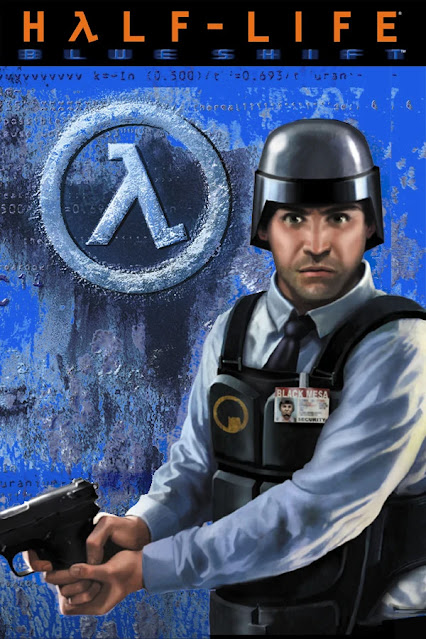
Retro Review - Half-Life: Blue Shift [2001]

20 years ago Half-Life: Opposing Force developers Gearbox created what was known as "Half-Life: Guard Duty" as exclusive extra content for the Sega Dreamcast port which was due to be released in 2001. However when Sega pulled the plug on the console and it was then abandoned by all major publishers, including Half-Life publishers Sierra, Valve decided to release Guard Duty as a stand-alone expansion to Half-Life as with Opposing Force. Expectations were understandably high for the newly dubbed Half-Life: Blue Shift as in 1999 Opposing Force had been the first expansion pack to be nominated for PC Gamer's Game of the Year. Sadly these lofty expectations were not met and it was neither received well by critics or the fans.

I hadn't played Blue Shift since the PC:CD-ROM era, so over the holidays I decided to take the Steam version for a spin in honour of it's 20th anniversary as I did for Opposing Force. As with the earlier expansion, Blue Shift now takes advantage of the Half-Life High Definition Pack which contains the high polygon and retextured assets developed for the Dreamcast but have since been added to the original Half-Life games on Steam over the years through patches and updates. Although they were added in 2005, I had not played it with the HD assets before so it was great to see the enhancements do the same for the game that they had done for Half-Life and Opposing Force.

Blue Shift itself is extremely short with less than 3.5 hours of game play. This is understandable when you understand that it was designed to fit on a Dreamcast disc along with the entirety of Half-Life as well. However for a full-price expansion pack to last just this long irked many reviewers and fans in 2001. It further disappointed with less weapons in the arsenal and limited to enemy types than were only seen in the original game. Blue Shift has an insignificant plot and sadly the game overall offered none of the innovation that was introduced in Opposing Force some two years previous. 

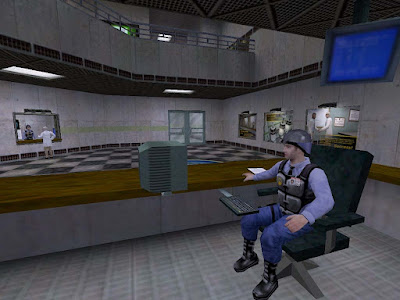
While Marine Corporal Shephard's story in Opposing Force was an amazing parallel story to scientist Gordon Freeman's adventures in the original game; in Blue Shift you're just security guard Barney Calhoun simply plodding your own way through Black Mesa. The story is again parallel to both Shepard and Freeman and evokes some moments of nostalgia as you briefly see Gordon himself and hear Shephard being mentioned over the radio but unlike those iconic heroes you're not trying to stop anything world-ending, you're just trying to escape and that's just not a great driving narrative for a game whose progenitors were some of the best story-driven FPS games in their day.

Half-Life Blue Shift's only real saving grace is that it's familiar and slightly scratched the itch for fans of Half-Life for... more Half-Life. There is precious little in the expansion for anyone other than a fan of the earlier entries. There is sadly no innovation over the original game so it may actually benefit one to play it between Half-Life and Half-Life Opposing Force as the latter features advancements in both game mechanics, enemy types, weapons and story over the original game that Blue Shift just does not use. Due to the limitations Gearbox were under it makes sense to us now that Blue Shift could only use the assets from Half-Life (the game on the Dreamcast disc) and nothing from Opposing Force but as these limitations weren't made clear in 2001 to it's PC audience the reception was understandably frosty.

On a modern Win 10 system with SSD storage and a fibre connection, Half-Life Blue Shift will download and install in less than 60 seconds. There was a mouse issue which is fixed by setting 'Accept Raw Input' in the Mouse Settings. There were no install issues, pauses or crashes and it ran within 3 seconds after execution. 4K resolution is accepted but there is no HUD scaling (nor did I seek any 3rd party modifications) so one needs to drop resolution to a level where you can read the HUD and text. As with all Valve games Half-Life Blue Shift is only available now through Steam for €3.99. While this is genuinely acceptable for the sublime Half-Life Opposing Force, I absolutely do not recommend Blue Shift at this price point. I got it for 0.79c on sale and you can wait for this too.

Saturday, May 25, 2019

Retro Review - Half-Life: Opposing Force [1999]


Modern gamers, younger modern gamers that is, are only used to DLC which serves to extend a main game with extra levels for multiplayer or a few extra hours of content for single-player. They will never know the thrill of waiting 8-12 months after the release of a 'main' title, to pick up a so-called 'expansion pack' from store in a box with a CD-ROM/Floppy disks for a few more hours of fun likely with some extra enhancements for the main title. Some of the greats from the 1990's were Defender of the Empire for Star Wars: Tie-Fighter, Tales of the Sword Coast for Baldur's Gate, Mysteries of the Sith for Star Wars - Dark Forces 2: Jedi Knight and The Plutonium Pack for Duke Nukem 3D, but none of them came as close to being the sublime masterpiece that was Half-Life: Opposing Force.

While Valve's 1998 breakout game Half-Life, one of the most significant video game events of the late 1990's actually did live up to it's massive hype, as would it's sequel years later, the task of creating it's inevitable expansion pack was outsourced to the fledgling studio Gearbox, who would go on to make their own name much later with the Borderlands series. Gearbox took the engine and assets from Half-Life and skilfully created, a practically new game that while similar in many ways to Half-Life, was different enough to become it's own thing.

Opposing Force casts you as Corporal Adrian Shepard one of the U.S. Marine Hazardous Environment Combat Unit antagonists of the original game. Only from your perspective now of course, you are a protagonist, oblivious for a while as to your true purpose in Black Mesa but it's handled with some pretty logical storytelling without either interfering with Half-Life's main story or casting you as 'the bad guy'.


Now in addition to the denizens of Black Mesa from Half-Life like scientists and security guards, you encounter invading Xen aliens (you kill them), Race-X a separate alien race who will attack you or Xen aliens indiscriminately (so kill them too) and Black-Ops soldiers who are there to silence Black Mesa personnel, any variety of alien they encounter while doing it and have no issue about shooting you on sight too (so kill them). In fact the only people in this game that you don't shoot are your fellow Marines who are there to provide assistance. You get fire support from the Machine Gunner, a shot of health from a Corpsman and an Engineer is sometimes needed to open an otherwise inaccessible door. Now these were not the same class of AI teammates as in Rainbow Six or Hidden and Dangerous at the time, as they basically charged into battle with reckless abandon without using either common sense or cover but they would serve to add some character to the world and remind you you weren't entirely alone on this crazy mission and if nothing else they all dropped much welcomed weapons when they were taken out.

As for weapons, Half-Life had a fantastic arsenal but I always found it daft that a bespectacled research scientist Gordon Freeman seemingly was able to pick up any military grade weapon and instinctively know how to load and use it with precision accuracy. Opposing Force has a much better excuse for this as you're a Marine, so it's kind of your bag to be able to use the weapons (they even train you in the prologue) - and you get plenty of cool modern military, cutting edge science and of course liberated weird alien weapons to eliminate the obstacles in your way that would prefer you not to escape Black Mesa.

At the time of it's release in November 1999 Opposing Force was a pretty big deal as far as expansion packs went. In 2000 the Academy of Interactive Arts and Sciences gave it Computer Game of the Year Interactive Achievement Award. PC Gamer dubbed it "Best Expansion Pack" and nominated it as 1999's overall best game of the year (although it lost to Homeworld), they wrote that Opposing Force "makes history by becoming the first expansion pack to be considered for Game of the Year. Yes, it really is that good."


Opposing Force is as dated as Half-Life looks today but thanks to HD texture packs it looks slightly better than it did back then, which was graphically on par with Quake II or Jedi Knight. While nowhere near up to Lucasarts level design in comparison, Gearbox copied Valve's design play-book and did just as good a job as Valve originally did. It's pretty much as linear as they come, but does a good job of masking that by interposing large cavernous areas reached by funnelling you down narrow corridors or vent shafts. In my option it's gameplay is solid enough to warrant sparing a mere 6 or 7 hours to go and relive the glory days from 20 years ago.  

On a modern Win 10 system with SSD storage and a fibre connection, Opposing Force will download and install in about a minute and a half. I report no configuration or initialisation issues, pauses or crashes and it ran within 4 seconds after execution.  4K resolution is accepted but there is no hud scaling (nor did I seek any 3rd party modifications) so one needs to drop resolution to a level where you can read the hud and text.

The only faults I had with Opposing Force today, are pretty much the same ones I had 20 years ago. Gearbox had clearly no military advisor nor apparently anyone close to the production who was related to anyone in the Marine Corps. I'm thinking they probably watched Full Metal Jacket or An Officer and a Gentlemen a couple of times and shoved in their own idea of a drill instructor from that who jarringly referred to Marines as "soldiers" all the way through the training levels. The word "soldier" was repeated about 40 times and I gritted my teeth every time I heard it. Of course they do other little things like calling the Corpsman a "Medic", but that's a standard Hollywood mistake too. There was a HD texture pack released between Opposing Force and the second Half-Life expansion pack Half-Life: Blue Shift that did include some SFX alterations and I hoped they would correct at least the drill instructor's offending dialogue, but sadly no, that itself creates a new issue of using 9mm ammo in an M4! So it's just a case of doing what the DI says and "Suck it up!" At the end of the day I guess it's an issue that only really annoys those who wear the uniform.
 

Note: The original CD-ROM version of Opposing Force required the original Half-Life disk to authenticate - but the Steam version is treated as a stand-alone expansion and does not require the original Half-Life to be in your game library. The team version will automatically load the HD texture pack.

Half-Life: Opposing Force is only available from Steam for €3.99 but can be found in some sales for just €0.79.

Friday, March 26, 2010

Goodbye Ben Maxwell: Robert Culp 1930-2010

For the longest time when I thought of an "FBI agent", I'd think of Ben Maxwell on The Greatest American Hero. I used to therefore think that FBI Agents were hard-asses who constantly spoke through clenched teeth and were impossibly tanned - it wasn't until I saw Special Agent Dale Cooper in Twin Peaks that I revised my opinion which up to then was completely formulated by the legendary Robert Culp.

Culp, a Californian actor gained notoriety as Hoby Gilman in the Western TV series Trackdown from 1957 to 59 and for his many television performances including episodes of The Man From U.N.C.L.E., Shaft and for 3 years on I-Spy with Bill Cosby, a series for which he was not only nominated for an acting Emmy, but also one for writing a number of episodes.

Following his 3-season role on The Greatest American Hero in the early 80's Culp made dozens of appearances on some of the best known shows on TV such as Matlock, Jake and the Fatman, Dr. Quinn: Medicine Woman, Hardcastle and McCormick, Chicago Hope and Walker: Texas Ranger. He had a recurring role on Columbo as as Dr. Keppel and portrayed Cornelius Farnsworth in Lonesome Dove: The Series.

Culp rarely strayed from television making few movies but is noted as Ens. Ross in PT-109, the story of John F. Kennedy's time as a Naval officer in WWII and in 1994 he played the U.S. President in The Pelican Brief. Culp was also noted for his voice work on Disney's Gargoyles and more recently as Dr. Wallace Breen in the Half Life 2 videogame series. In '07 he voiced a hilarious appearance reprising Ben Maxwell in a Robot Chicken spoof of The Greatest American Hero.

He completed many projects per year up until 2003 where he took on few new projects. Culp died from a fall outside his Los Angles home Wednesday. He was 79.

Thursday, April 02, 2009

Who needs carrots? Shoot Nazis for the same effect!

According to this report from News.com.au; video games are "good for eyes" and shooting games go further by improving contrast sensitivity. Contrast sensitivity is the ability to notice tiny changes in shades of grey against a uniform background, and is critical to everyday activities such as night driving and reading. It often degrades with age.

"Normally, improving contrast sensitivity means getting glasses or eye surgery - somehow changing the optics of the eye," said Daphne Bavelier of the University of Rochester in New York, whose study appears in the journal Nature Neuroscience. "But we've found that action video games train the brain to process the existing visual information more efficiently, and the improvements last for months after game play stopped."

For the study, the team divided 22 students into two groups. One group played the action games Call of Duty 2 and Unreal Tournament 2004. A second group played The Sims 2, a game they said does not require as much hand-eye coordination. The two groups played 50 hours of their assigned games over the course of nine weeks. At the end of the training, the action game players showed an average of 43 per cent improvement in their ability to discern close shades of gray, while the Sims players showed none.

Professor Bavelier found very practised action gamers became 58 per cent better at perceiving fine differences in contrast. "When people play action games, they're changing the brain's pathway responsible for visual processing. These games push the human visual system to the limits and the brain adapts to it," she said in a statement.

She said the findings revealed a previously undiscovered adaptability in the brain and show that action video-game training may be a useful complement to eye-correction techniques and could open the way to new therapies. The positive effects can remain for months and even up to years after training.

I recall the last eye exam I had. The optician asked me to read the last line. I recall smiling confidently, almost arrogantly to her and replying: "Printed in Italy." I had always suspected my above-perfect vision was due to liking carrots, now I know it's because of Half-Life :)

Source: News.com.au / Gamespy /Couriermail.com.au

Tuesday, September 30, 2008

Half-Life 2: Episode 2 - Steamed!

This is the “middle” episode of the 3 episode saga after Half-Life 2 proper, so you would be forgiven for initially thinking that it would just be "filler" until the third and final episode. However, I wouldn't forgive anyone for thinking it's just filler after they played it. It's just as fresh and rich a gaming experience as HL2 and Episode 1 before it. On today's hardware the game runs more smoothly than ever before; the engine is only now beginning to slightly show it's age, yet it still remains one of the most graphically impressive gaming experiences available today.

Even from playing the first few minutes Episode 2, you realise that you’ve returned to the best gaming experience ever created. Valve's second expansion to the “best game ever” is a perfect example of how to tweak the mechanics and prolong the superbly crafted tale by adding just a few more hours of gameplay for the fraction of the cost of a full game. Indeed there’s almost nothing new about Freeman (you), your abilities or weapons etc. as it takes place only minutes after the end of Episode 1, but you’re in very different environments then you’ve been in for the past several hours of the saga. In Episode 2 you’re in the countryside for the most part, (detouring for a while to investigate the lair of the Ant-Lions) outside the desolate urban area of what now remains of City 17, visiting unused power plants, half destroyed bridges, inoperative train yards, deserted villages and silent logging compounds to name but a few of the varied scenes the action takes place in.

You'll be pleased to know that all the staple Half-Life 2 elements are intact. Perfectly controllable drivable vehicles allowing you traverse some of the greater distances in this expansion, your sidekick Alex still driven by the most advanced artificial intelligence still found today and the trusty zero-point-energy gravity gun which I feel you use more then before as you have to solve some of the most audacious, yet logical physics puzzles you’ve ever faced. The combat is more innovative and perhaps less tactical than previously, partly due to the change in environment and is a most welcome change.

Your enemies have not been idle either, the Ant-Lions have bred a new breed of warrior capable of dealing severe damage with it’s acid mortar-like attack. The Combine have also created a Hunter- a tough, smaller and much faster version of a Strider that looks and moves pretty much like a gorilla and you're forced to employ your heavier weapons against them before they take you down with their exploding tazer bolt weapons.

The voice talent is still top of the line on par with previous installments: Tony Todd replaces Louis Gossett Jnr. as the Vortigaunts which have some of the most hilarious dialog in gaming. Adam Baldwin voices some of the more courageous rebel soldiers and the rebel who gives you your final battle briefing. Robert Guillaume returns as Dr. Vance as does Michelle Forbes as Dr. Judith Mossman, although her appearance is brief, it's obvious that she'll be a major part of Episode 3. Kelly Baily returns with his trademark Half-Life score to lend the final piece to the expansive soundscape.

Because of it's middle episode nature, I obviously can't recommend it for new players to the Half-Life franchise, because it assumes you know what you your doing and why you're doing it, there's a few tips to help you on the way if you've not played Episode 1 since it's time of release, but these disappear quickly and are far less than what you find in the most basic FPS training level - in other words you get right into the action pretty quickly.

I must finally applaud Valve's revolutionary Steam delivery service, which has grown exponentially since I last activated it. While I had expected to play Episode 2 for a year now, time and projects prevented me from doing so until August 29th this year; but once I made the decision to purchase and install the game, it was effortless to obtain. Like Episode 1 and SiN Episodes: Emergence, I was able to install it through Steam in about 3 hours due to Steam's ultra fast servers after Steam takes only €12.69 from your Credit Card (for Episode 2 only). Steam installs with Half-Life 2 or any time you desire for FREE from steampowered.com and now you get far more than Valve's back catalogue. It's easy to see why this is an example of the method from which we will obtain all our entertainment in the not too distant future; games, movies etc. and say goodbye to rows of shelves filled with plastic boxes and optical discs.

Final Verdict: This is exactly what an expansion should be: An extension of the original that stays ever so true to it's origins and borderline becoming a sequel in it's own right with it's innovation.

Colonel Creedon Rating: *****+

Saturday, September 15, 2007

Project: MAXXIMUS is complete

Well it wasn't quick but it was painless. I have successfully constructed Maxximus and amazingly it works! It functions quiet and cool under a full load which were my main issues with its predecessor Bellerophron. The only issue is that system temperature is a high at 42°C when idle but strangely it doesn't rise much under strain.

Tested so far with Super-Pi, Prime95, Benchmarked Half-Life 2: Episode 1 @ 1920x1200 with 8xAA & 8xAF at 61FPS and I've played some Medal Of Honor: Airborne and the World in Conflict Demo without issue.

As you see from the photo it gives off a blue glow from both the front and the back which is a bit daft but not as bad as some other cases available. Unfortunately the only way of disabling the glow is also disabling the fans which would no doubt cause some flames.

I must also share this picture below of Maxximus' screen, an LG 24" HD monitor displaying my first 1080p download, the new IRON MAN trailer (now available in all flavours here) certainly worth a 200Mb download.

Full specifications for Maxximus can be found at VerTecX21.com.

Monday, May 15, 2006

Half-Life 2 Episodes will stand alone

Half-Life 2 was 2004 Game of the Year all over the shop. It revolutionised both graphics and gameplay and was a welcome long break from the first-person shooters which have become shorter in length as the years go on. It was a nearly flawlessly paced action game set in a fictional universe that only got more interesting with every new mystery. It sold a lot of copies. Developer Valve was well aware of the game's coming popularity before it was even released and the planning had already been working towards the future of Half-Life. Not long after HL2's release, the Aftermath expansion announcement solidified Valve's commitment to continuing the franchise in smaller and more frequent bursts.

Even if you're not a fan of Half-Life then you'll still have heard about Aftermath mainly because I wrote about it here in January. Well in February Valve announced that the first Half-Life 2 expansion would be known not as Aftermath anymore but as Episode One, reflecting the company's fantastic decision to release a series of episodic add-ons to the hit shooter, rather than the typical one or two expansions. This was further confirmed by Valve indicating that it is also preparing Half-Life 2: Episode Two, the second such add-on.

While the company isn't revealing any details on Episode Two, Valve's Doug Lombardi did say that the second episode has been in development for about as long as Episode One. Presumably Episode Two will offer another capsule of gameplay and continue the Half-Life 2 story. Valve's Erik Johnson recently said: "Part of the strength of episodic production is being fluid and responding to how customers react to previous episodes. With the Episodes, we're working towards a specific event, and we have a plan for how we get there. Some of the details may change along the way, but the core is etched in stone. Episode Two has been in production for some time, and we'll be talking about it in more detail immediately after Episode One is made available.

Furthermore although it started out as an add-on to HL2, this is not the case anymore; the new chapters won't require the original Half-Life 2 at all. They will run as stand-alone titles; so if for some insane foolish reason you've avoided Half-Life 2 all this time, you can dive in for just a quick episodic snack. Of course that would be like watching Episode 13 of any series of 24, if you do come in to the HL2 story at these points you won't have a fucking clue what's going on.

Half-Life 2: Episode One is sheduled to arrive May 31st.

Tuesday, January 10, 2006

Half Life 2: Aftermath coming soon

An add-on expansion for the greatest video game in the western world; Valve's Half-Life 2 entitled Aftermath will be available in late April it was announced today.

Unlike the original Half-Life's expansions; Opposing Force and Blue Shift where you took control of US Marine Corporal Shepard and the Black Mesa Security Officer Barney respectively, this expansion for Half-Life 2 will actually continue on the game's story from where you were left hanging in the explosive and spectacular ending to the greatest piece of interactive entertainment ever conceived.

Valve seem keen to outdo themselves with the add-on and they've revealed a little of what's going on:

"You've done critical damage to the Citadel. The whole place is going to go up, taking out City 17 and what's in its immediate radius. You and Alyx are leading the flight from the city getting up close and personal with some of the creatures and sights from the end of the game," a Valve representative said.

It was also noted that a good portion of the characters from the sequel will be present in the new episode and that Alyx and other allies, learn new abilities to help you that have interesting gameplay repercussions. Your enemies, both old and new, haven't been resting either."

And of course the characters, especially Alyx, will be playing a more significant role this time: "The biggest regret we had about Half-Life 2 was that you didn't spend enough time with the major characters. Players spent small sections of the game with allies, and interactions with them were fairly constrained. As a result, this is the first challenge we set out to tackle in Aftermath,”

As Aftermath plays out, expect a few questions to the secrets of the Half-Life universe to be answered, although hurting our brain matter new questions and mysteries are to be raised.

I hope they include those cool High Dynamic Range (HDR) lighting effects they released with Half-Life 2: The Lost Coast in October, those where certainly some of the best effects work I've ever seen in a game. Valve affirmed that because it's an episode "it's intentionally shorter than Half-Life 2" and will be delivered through Steam (and after the split from Vivendi, EA Games have taken up the duties to sell the DVD's to the boggers without broadband) from April 24th.