Tuesday, April 29, 2025

25th Anniversary Review - Star Trek: Voyager - Elite Force (2000)

Raven Software may be a support studio for Call of Duty now, but they once took modified forms of id-Tech engines and built some of the best FPS games of the turn of the century. Three of my personal favorites were Star Wars Jedi Knight II: Jedi Outcast, Soldier of Fortune and of course a very unique game in Star Trek: Voyager - Elite Force.

One would not have thought of the Star Trek franchisee being ripe for an FPS game as shooting things with phasers to a degree that would support an entire game and was never really Star Trek's style, especially on Voyager. Nontheless we got a sort of "created only for the game" elite Starfleet Hazard Team that would be sent on the most dangerous missions the regular security officers would be unable to do because... video game plot device.

Raven's gambit worked because Elite Force which leveraged id Tech 3 (used for Quake III) lent itself superbly to realise the most incredible Star Trek experience for it's time. The plot wasn't out of place in any episode of the show and the visuals were created from what must have been exhausting levels of research. Much like prior Star Trek franchise games, the entire main cast provided their characters voice overs for the game to truly cement your immersion.

There was a significant amount of scripted sequences to build tension and further the narrative but you had agency to affect the outcome through your actions which was not the norm for the time. Gameplay usually has you transport to usually hostile environments on away missions to shoot your way through alien vessels and eliminating threats with everything from your TV show accurate phasers to some interesting additions by Raven to round out the common 10-slot weapon load-out for the game genre.

Final Verdict: It's not my first time back in the 25 years since release but I still enjoy returning to Voyager - Elite Force to shoot things with phasers for about 8 hours, which is short for a game yes, but long for an episode of the show, an atmosphere that Raven so expertly recreated here and (thanks to GOG) runs great on a modern system.

Technicals: 8 hours through GOG Galaxy on Windows 11 with an RTX4070Ti

Availability: Star Trek: Voyager - Elite Force is available from GOG for €9.99. Review copy purchased in September 2023 for €5.99 from GOG.

Star Trek: Elite Force series:

  • Star Trek: Voyager - Elite Force (2000)
  • Star Trek: Elite Force II (2003)

Monday, February 10, 2025

10 Future Video Games on the General's Radar

A list of 10 games that caught my intention in alphabetical order. A few are expected this year but the way things are going in the games industry it possible that that only some of these will even be completed.


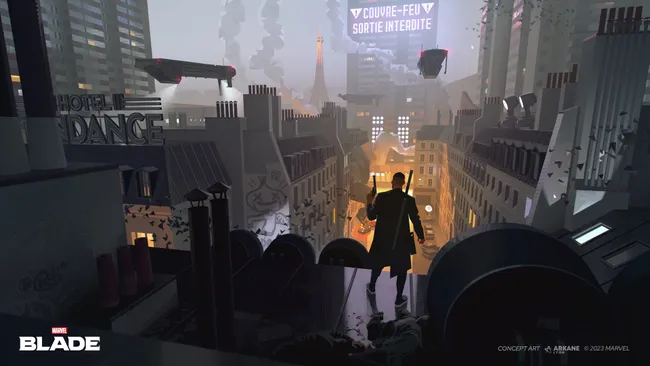
Blade (Arkane/Bethesda)

https://cdn.mos.cms.futurecdn.net/c6jTSCqwVg63Vvju8zfcMg-650-80.jpg.webp

Everyone's favourite daywalking dhampir is getting his own 3rd person action game with lore from the Marvel comics as opposed to Wesley Snipes movies. It'll be 2026 before we see anything about this game after its reveal in late 2023.


DOOM: The Dark Ages (Id Software/Bethesda)


The third installment of the 2016 rebooted DOOM franchise.This is touted as the "epic cinematic origin story of The Slayer's rage". I get worried when id use the word "story" for a DOOM game but we'll see this year.


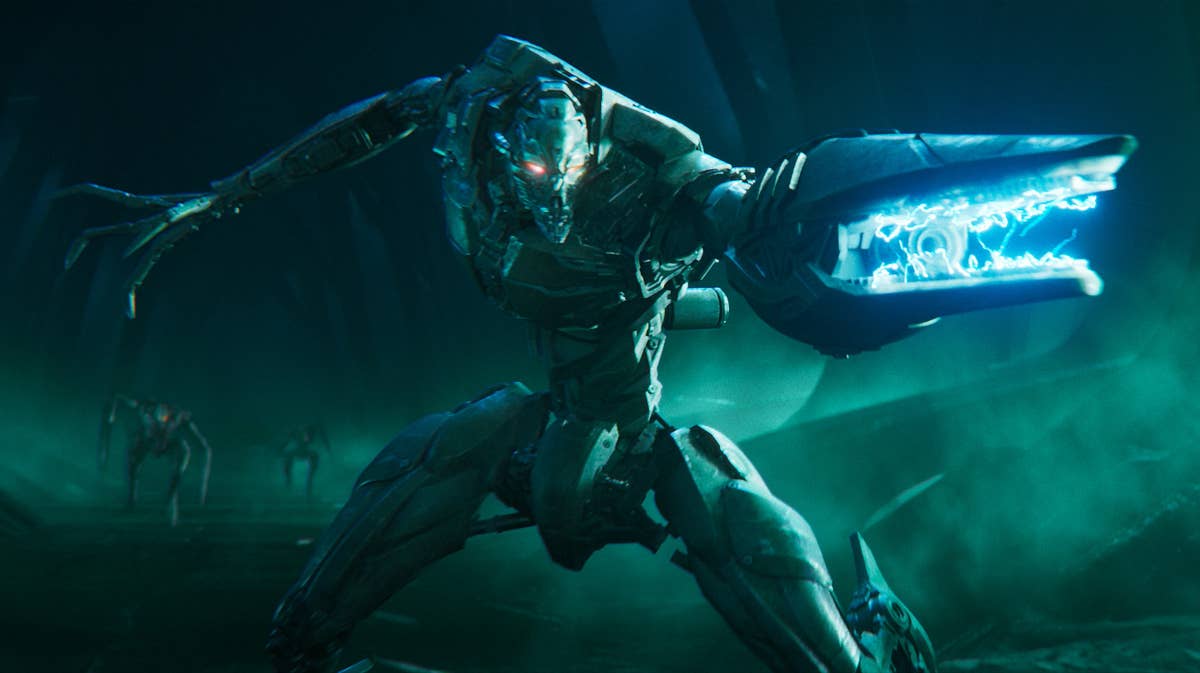
Exodus (Archetype Entertainment)

https://assetsio.gnwcdn.com/1-16-9.jpg?width=1200&height=1200&fit=bounds&quality=70&format=jpg&auto=webp

From Archetype Entertainment who were formed by ex-Bioware personnel, Exodus is being advertised as Sci-Fi action adventure RPG which looks to the the spiritual successor to the older Mass Effect games with a heavy dose of concepts explored in Christopher's Nolan's Interstellar, they even have Matthew McConneghy on board with some voice work. The promotional work being done here is some of the best I've seen.


Iron Man (Motive/EA)

CDN media

EA has the license for an Iron Man game and have tasked Motive to develop a game we know little about but expect it to be a single-player action adventure and have an open world judging by some job listings last year. I'm a major fan of Iron Man and I hope they use lore from the Marvel comics as opposed to the MCU. If there was a side game mechanic to manage Stark Enterprises, prevent your heart stopping and battling alchohlism as well as being a superhero it just might be perfect.


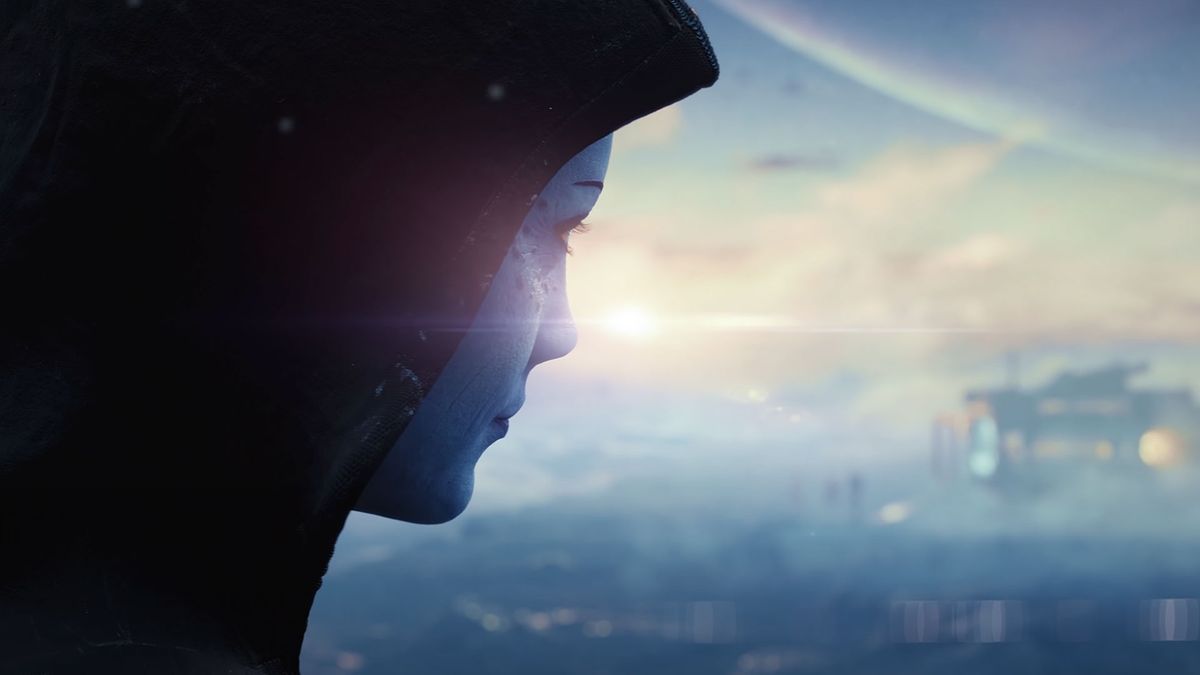
Mass Effect 5 (Bioware/EA)

https://cdn.mos.cms.futurecdn.net/r4EjMCMPisT2LQBVByX4p-1200-80.jpg

With Dragon Age: The Veilguard not exactly inspiring too much confidence in the studio, Bioware remain committed to working on the next Mass Effect which will be developed with Unreal Engine 5. If we see this before 2028 I'll be shocked.


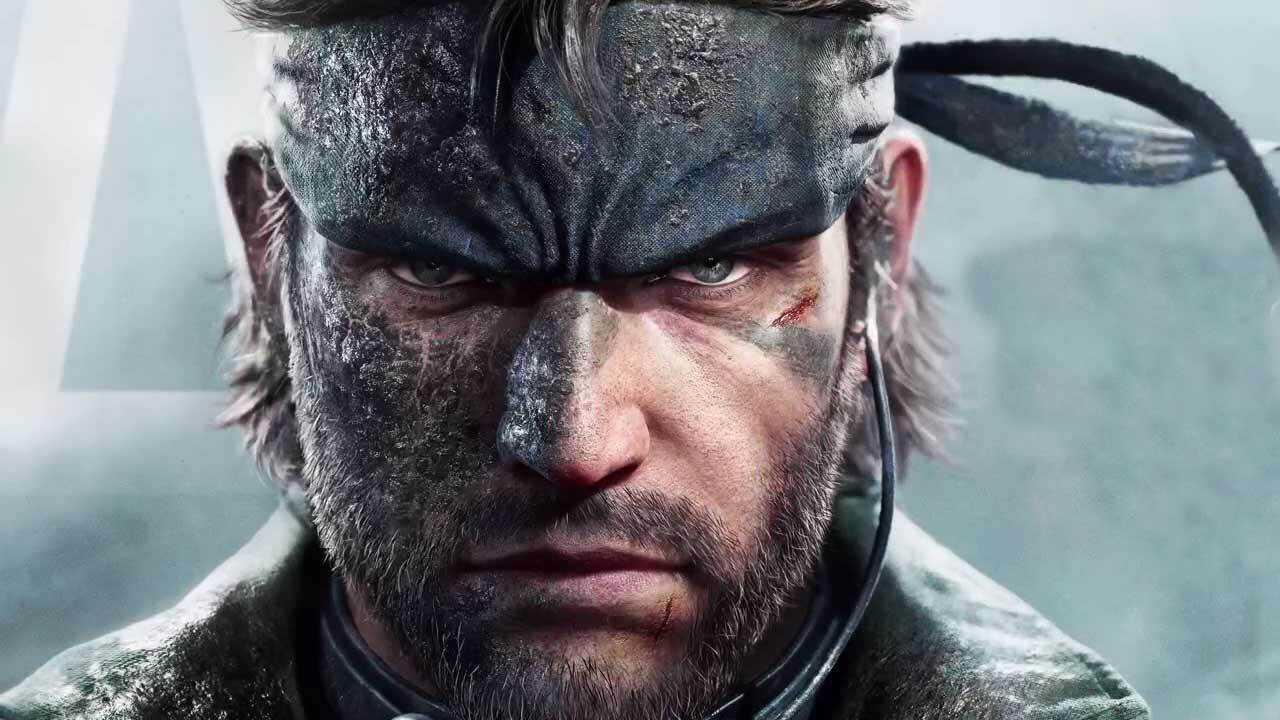
Metal Gear Solid Delta: Snake Eater (Konami)

https://www.gamespot.com/a/uploads/original/1601/16018044/4144866-mgsd-6.jpg

An Unreal 5 remake of Metal Gear Solid III for current gen consoles, but more importantly - the PC! It's just a remake so hopefully it's gone smoothly without Hideo Kojima on board. We should find out this year.


Project 007 (IO Interactive)

https://assetsio.gnwcdn.com/Project-007.jpg?width=1600&height=900&fit=crop&quality=100&format=png&enable=upscale&auto=webp

Hitman developers IO Interactive are working on a James Bond game. I'm assuming a third-person action game but I guess we'll see in due course. 


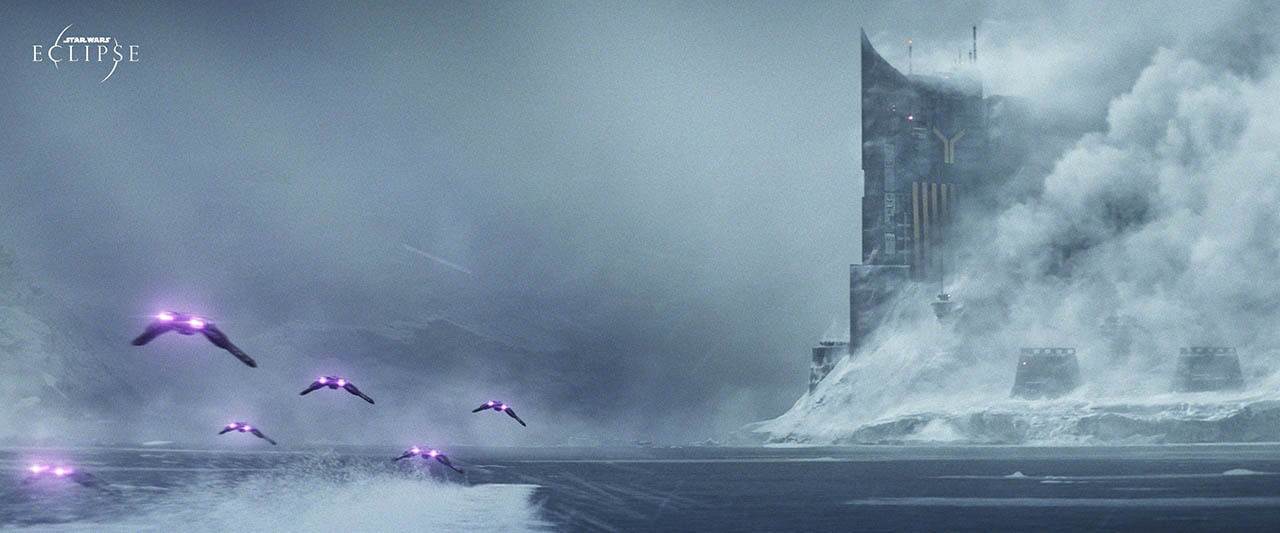
Star Wars: Eclipse (Quantic Dream/Lucasfilm Games)

 https://lumiere-a.akamaihd.net/v1/images/star-wars-eclipse-15-fortres-385992549263_b587e4c8.jpeg

PR embattled Quantic Dream's games have always intrigued me by how different from other games they are. I'm fascinated by how this could be applied to Star Wars even though it's set in the High Republic era. 


Vampire: The Masquerade - Bloodlines 2 (The Chinese Room/Paradox Interactive)


This is a long, long, long awaited sequel to 2004's Bloodlines. It began development at Hardsuit Labs in 2016 but was halted in 2021. Publishers Paradox decided against cancelling the game and instead unveiled in 2023 that The Chinese Room had picked up development. I'm not holding my breath expecting it this year.


The Witcher IV (CD Projekt Red)

https://assets-prd.ignimgs.com/2024/12/13/tw4-inside-blog-1734053107357.jpg

The recent reveal of a Witcher IV trailer reminded me that I need to play The Witcher III. before this comes out in I expect 2027.


Sunday, January 12, 2025

First Play Review - Dragon Age: The Veilguard (2024)

It had been a significant amount of time since there has been a new Bioware game, and with good reason. The last entry in the Mass Effect franchise, Mass Effect: Andromeda didn't too much to re-engage the fans of the original after its near-disastrous launch issues and their last game Anthem, a multiplayer ARPG was an attempt at a new genre and new franchise in 2019 that crashed and burned so badly it could have taken the company with it. After playing their new release Dragon Age: The Veilguard, a part of me wonders if that might not have been such a bad thing to happen.

Everything here seems great initially. The team at Bioware and EA got so much right with this release, one couldn't not be excited by this being possibly a new paradigm for AAA gaming in the  mid-2020's. DA: The Veilguard had lower price than industry average base price at a time where nothing was being reduced. There was no extra annoying accounts beyond logging into the store you purchased the game on, i.e it is an EA Game but no EA App/Origin nonsense for Steam here. No Denuvo DRM employed to debilitate system performance. A complete game was delivered on day one, no cut story content being offered as DLC. No loot boxes and other pointless micro-transactions in an in-game store. No X-Days early access to the full game for pre-orders. No live service shit. Ultrawide support for all cinematics. And most importantly against industry-norms, Dragon Age: The Veilguard worked flawlessly out of the box on day one, fully and perfectly optimised for nearly all systems. 

The gameplay of Dragon Age: The Veilguard took a little while to get used to but it soon became easy to master. I played the rogue class which is far more like a traditional ranger than a rogue as there's no traps or stealth in the game. With two blades and a bow your hero "Rook" can drop foes both at range as well as up close with a small but versatile array of options that can be tinkered with and swapped out depending on what you want. You are always accompanied by two companions who have abilities which can compliment both each other or yours with a primer and detonation combo with somewhat satisfactory results if used correctly. The pause menu allows you to target and unleash powers and hotkeys activate your own abilities to. I'll admit the combat effects can be somewhat too flashy compared to past games but this seems to be the norm among other games now. Levels of difficulty seem only to scale mob hit-points so I increased the difficulty from the easiest setting early on when I felt things were being killed far too quickly and kept it there. It didn't stop me from being killed but it made the whole experience much more satisfying.

The environments were varied and the levels were very well constructed and mapped out. Exploration was encouraged by the fact that if there was a ledge either above or below you, then more often than not there was actually something to find there. It is not quite an open world but still large enough to welcome unlocking a fast travel point when you came across it due to a fair amount of revisiting locations once you were high enough level or had the McGuffin required for the area.

Now with such a fantastic list of pros, how could this be anything but a win? Well there is a few other stars that need to be aligned before a win is declared and most of that comes from what one expects from a company who once held the RPG crown in the gaming world. Dragon Age is Bioware's dark fantasy setting, the keyword here being 'dark'. And anyone playing any of the earlier Dragon Age games knows how that is defined. What one should not do to promote a dark fantasy is to change the realistic art style employed by the previous games and give it a mismatched cartoonish look where characters are clearly too stylised to fully take seriously. This was the first red-flag.

As one progresses through the game it becomes painfully clear that the true magic of Bioware has now long left the building. The dialogue is somewhat infantile both from Rook and your companions and opportunities for the type of role-playing that Bioware is renowned for is non-existent. Choices that appeared in each dialogue wheel from Knights of the Old Republic, Mass Effect and into Dragon Age which defines your character as a negotiator, goody-to shoes or an outright asshole are absent and have been distilled down to "nice guy", "nice guy with a quip" and "firm-but-nice guy" and that's about it (unless there's an extra specialisation option depending on whatever options you took at character creation). It's a total regression of the system and leads always to the same outcome which is absolutely not what an RPG is supposed to do, certainly not a Bioware one.

The NPC companions on offer here seem to be defined by their quirks or job roles rather than their personalities and considering the quality of previous companions from Bioware it only cements the truth that the magic is gone. Romance, something that Bioware achieved to such a degree that it's been copied and added onto countless games and even noted as a negative absence in RPGs that have not employed it - well here it's tame to an insulting degree and takes up less than 15 minutes of what could be an 80 hour play-through. Fox News once tried to get Mass Effect banned based on "Alien sex scenes", i.e. the consummation of Commander Shephard's romance with Liara in 2008. Well not even the most devout religious holy-fucking-Joe nutjob would have had a problem with the infantile passionless love scenes on display here, PEGI-18 my ass, the only nudity was in the character creation screen!

It seems like the developers went out of their way to not offend a certain 1% of people at the cost of the 99% who wanted a real RPG. They spent longer on a storyline exploring one characters questioning of their own sexual identity, to the detriment of every other character's development (including your own) something that should have only been done if you choose those options but here it was made essential to the characters level progression which was ridiculous and was always cringe-inducing.

One major issue doesn't crop up until near the end and it's a significant issue especially those with expectations based on games following a certain Bioware formula. You are at some point faced with what seems like a normal gameplay choice and by this time you've faced several but this seems like a Mass Effect 2 "suicide mission" choice where you send one companion to do something and based on their loyalty level they live or die. This experience may lead you to ensure your characters are at max loyalty if you want to keep them alive. What they don't tell you is that the choice you're making here is a "Virmire" choice, named after a Mass Effect 1's command-decision of who gets left to die regardless of their loyalty/romance level. It's a bait and switch that may lead to a decision you'd not have made had you known the potential consequences and it feels like a decision taken from you because of it. While I commend the developers for doing something unexpected, something with such a genuinely horrible outcome no matter what you do feels too bitter a pill to swallow and I reject it outright.

With all that said however the game's ending sequence, the last two to three hours leading to and including the final confrontation, is so genuinely exciting and visually impressive that it's like a completely different team was responsible for it's creation. It has some incredible moments that I really think the price of admission was worth it. It's kind of a meme that Bioware doesn't end their games properly with any level of satisfaction and perhaps this is a positive example that this just isn't the true Bioware team because this is one of the best video game endings in many years.

Final Verdict: While technically superior to practically every other game released in recent times, Dragon Age: The Veilguard's exciting and cinematic gameplay and excellent score by Hans Zimmer and Lorne Balfe is sadly mismatched to chronically juvenile writing, weak characters and misplaced pandering to "sensitive" and "modern" audiences at the cost of meaningful RPG elements or delivering to the players that supported the franchise for so long.

Technicals: 80 hours through Steam on Windows 11 with an RTX4070Ti @ 3440x1440/90FPS with in-game HDR and Ray Tracing.

Bugs: One crash 50 hours in. No recurrence. After one lengthy session, breakables stopped breaking, restarting fixed.

Availability: Dragon Age: The Veilguard is available from Steam or the EA Store for €59.99. Review copy purchased in August 2024 for €59.99 from Steam.

Dragon Age series:

  • Dragon Age: Origins (2009)
    • Dragon Age: Origins - Awakening (2010)
  • Dragon Age II (2011)
  • Dragon Age: Inquisition (2014)
  • Dragon Age: The Veilguard (2024)

Sunday, December 29, 2024

Obituary: Former President Jimmy Carter (1924-2024)

Lt. James Earl Carter Jr., U.S. Navy left the service after seven years in 1953 to take over the running of his family's peanut farm before running for a state senate seat in 1962. On the last day of his state senate office he announced his congressional campaign later becoming the Governor of Georgia in 1971. He angered his supporters by declaring that "the time of racial discrimination is over" in his inaugural speech making civil right a core tenant of his office.

In 1976 Carter's successful presidential campaign defeated Gerald Ford and was run on supporting a consumer protection agency, a cabinet department for education and signing peace with the Soviet Union to name but a few.

Carter was sworn in as the 39th President of the United States in 1977. He inherited a troubled economy and an oil crisis which increased inflation. He faced considerable domestic issues in trying to get the American people to accept austerity.

He was successful in getting Egypt to recognise Israel with the Camp David Accords and he returned control of the Panama Canal to Panama. Unfortunately he mishandled the Iranian Hostage Crisis which was reflected in the downfall of his presidency and landslide defeat by Ronald Regan in 1980.

Following his White House tenure Carter remained active as a diplomat and statesman over much of the past 40+ years and was awarded the Nobel Peace prize for his promotion of human rights. Well into his early 90's he was also a volunteer with Habitat for Humanity who help low-income workers to build and buy their own homes and access clean water.

Carter also created The Carter Centre, a non-profit NGO and used his influence to improve the quality of life for people in more than 80 countries including assisting the WHO to nearly eradicate Guinea worm disease.

He died peacefully at this home at his home today aged 100. May "Deacon" (his secret service codename) rest in peace.

Monday, November 04, 2024

Retro Review - Hitman 2: Silent Assassin [2002]

I intended coming back to the Hitman franchise earlier in the year after my awful time with Hitman: Codename 47 in early 2023 but it's only now that I've completed the sequel Hitman 2: Silent Assassin. And yes, I did say completed as this game was a vast improvement of the broken mess Codename 47 is now.

You once again take up the mantle of the genetically enhanced clone 47 and proceed to snipe, strangle, poison or just shoot your way to your target and eliminate them. This time while the emphasis remains on patience and stealth, the pressure of remaining silent is eliminated and it's usually also possible to shoot everyone and generally make noise without blowing the mission; the odds of your own survival if you do this are significantly reduced. 

I had to use online resources to determine the rest of 'the story so far' but suffice to say in Codename 47 our protagonist discovered he was a genetic clone of several assassins and while successful - as evident by his performance in the real world - his creator nonetheless created an upgrade for the mass market that would be more 'controllable' and sent them to kill 47. Needless to say, they didn't survive, nor did the geneticist. In this sequel, 47 now lives in retirement as a church groundskeeper leaving the life of assassination behind him until circumstances thrust him into the thick of it once again.

Gameplay wise, Silent Assassin is significantly superior to the original. Perspective is still predominantly third person and the game is designed around it but you now can if you so choose, switch to a first-person view at your leisure for precision shooting or other actions. Your range of weapons is significantly expanded to include all manner of blades, shotguns, rifles and machine guns that 47 will collect during the course of his travels. These collections are permanent if you finish the level with them which is better than the original game's mechanic of needing to purchasing weapons with money (that you might not get if your score wasn't good enough). One thing I felt they did better in the original game was you could hold a dismantled sniper rifle in a suitcase and thus not draw attention. Here you need to carry large weapons assembled and unconcealed which causes alerts from everyone unless you have a both a disguise and location that matches your weapon.

Much as the original, your purpose is to assassinate someone, and someone who probably deserves it not that you should be brining a moral compass to these games anyway but I think your rating is better if you don't kill innocent bystanders. You are even given chloroform as a non-lethal takedown should you wish to do so. Your main target can always be directly shot or stabbed but it's often easier, and more satisfying if you can find a more 'artful' solution. In one level I crept into a Japanese villa where I observed a geisha serving sushi to the room where my mark was. I placed a poison fish on the serving plate and crept back out where I got notifications that my target was dead after I had let the area.

The original game's checkpointing system is thankfully replaced with a manual save. You are permitted only a few saves but I always had enough and you get more as the game goes on. One aspect they are a necessity for is the eventual trail-and-error gameplay loop. While certainly superior the original, the AI here can be a bit flaky. When properly disguised some enemies properly ignore you while civilians in the same area panic for no reason and therefore alert the soldiers to you. There's a lot of reloading required to do a trial and error to see what disguises can be used where and how long an enemy may take to notice you. Bizarrely if someone sees you running regardless of disguise they open fire rather than just think you're late for dinner, but it can happen when standing still too. The AI isn't bugged, it's just weird.

Final Verdict: This is not a perfect game but it is a classic case of a sequel building on the original in every way and making it better by fixing all the problematic issues that people had with the original, thus making it far more accessible. Playing today the AI isn't too forgiving making much of the game too difficult to achieve a good stealth rating the first time. Thankfully if it gets too frustrating then you can "go loud" and see if that works for you but if you still play carefully rather than treating it like a standard FPS.

Technicals: Played for 20.7 hours on Win 11 @ 1600x1200/60FPS. Graphics options are minimal.

Bugs: No technical system bugs.

Purchase Options: Available on Steam or GOG for €8.99. Review copy purchased from Steam €2.69 in January 2022.

Franchise [PC only]

  • Hitman: Codename 47 [2000]
  • Hitman 2: Silent Assassin [2002]
  • Hitman: Contracts [2004]
  • Hitman: Blood Money [2006]
  • Hitman: Absolution [2012]
  • Hitman [2016]
  • Hitman 2 [2018]
  • Hitman 3 [2021]
  • Hitman: World of Assassination [2023]

Saturday, October 19, 2024

20th Anniversary Review: Half-Life 2 (2004)

When I played the excellent Industria recently I was reminded that it was my intention to go back to City 17 this year in celebration of the 20th anniversary of the sublime Half-Life 2 and the story of everyone's favourite scientist cum commando Gordon Freeman was pretty fresh in my mind after having played the unofficial-but-blessed-by-GabeN Half-Life remake Black Mesa just last year. At the end of the game, if you don't chose death, Gordon is placed in stasis by the mysterious G-Man to await the next assignment. 

That assignment is granted when at the beginning Half-Life 2 you're awoken by the G-Man and inserted on a train bound for City 17, a dystopian hell-hole ruled over by The Combine a race of aliens who seized control of the planet in just seven hours some 20 years ago. Evidence of The Combine is everywhere in the world which adds to the oppressive feeling of their regime and psychologically constructs this in your mind without needing to explain it. A human overseer appears Big-Brother-like on ever screen and guards don't hesitate to to beat down any inkling of resistance to the rules (or because they feel like it). The atmosphere created in just the opening sequences sets the tone for the game and proved Valve's excellence at narrative storytelling through dialogue, sound and world design. You do manage to get out of City 17, amass an arsenal of weapons and allies and as you'd expect - get some payback - but this is Half-Life 2, and even with a couple of subsequent add on episodes released in the following years, there is a bittersweetness to know there's no final act, no final episode, no sequel - the only dark cloud over Half-Life is that it's an unfinished masterpiece.

That dark cloud however is no reason not to play Half-Life 2 of course. The gameplay is what separates interactive video-games as a narrative tool from books, movies or TV shows and the gameplay here is what separates Half-Life 2 from all competition. Half-Life was in many ways iterated on with Half-Life 2. All the standard weapons (but none of the silly/alien ones) including the iconic crowbar return with the addition of one of my favourite FPS weapons: The Pulse Rifle which is suitably lethal here and of course the weapon that made the game stand out and high above the competition - the "Gravity Gun" which could pull and push many of the game's objects and be used in both combat and as a method of solving puzzles. This becomes your primary tool to manipulate the world and mastering its use makes exploring the world, as well as some enemy encounters, much more enjoyable.

Unlike it's competition at the time consisting of mostly WWII shooters and maybe Halo games, a standout feature of Half-Life 2 is its variety. You wander through streets filled with Combine enforcers and depressed citizens, navigate murky sewers filled with goo and nasty creatures, drive a hovercraft though canals avoiding mines, pass through an undead filled shanty town with the aid of a priest, traverse the underside of a huge railway bridge avoiding a fall to certain death, attack a prison using an army of giant murderous ants, perform feats of fast-paced vehicular heroics with a dune buggy armed with a gauss gun, all before organising an army of resistance fighters to storm The Citadel, the Combine's miles-high monolithic tower which dominates the skyline as it pierces the clouds themselves. There is no other FPS that can come close to this variety and why it remains unsurpassed in that regard to this day.

Final Verdict: Half-Life 2 was 2004's Game of the Year on every magazine (remember them?) and website that made a GOTY declaration - and rightly so. At the time it was graphically sublime and its gameplay standards are relatively unsurpassed to this day. It was a welcome break from the first-person shooters which had become shorter in length as the years went by and felt more valuable for it. Featuring the voice talents of a trio of late actors Robert Culp (The Greatest American Hero), Louis Gosset Jnr. (Iron Eagle) and Robert Gullaume (Benson) with Michelle Forbes (Star Trek: The Next Generation) and music by Kelly Bailey, Valve didn't revolutionise the FPS genre with Half-Life 2 but it did create the very apex of the genre and City 17 is well woth a (re)visit 20 years on.

Technicals: 15 hours via Steam on Windows 11 with an RTX4070Ti @ 3440x1440/175FPS.

Bugs: It makes sense that Valve's magnum opus is flawless and runs flawlessly on modern systems.

Availability:Half Life 2 is only available via Steam for €9.75. Review copy was physically purchased in December 2004 with the Collectors Edition Tin which included a code to a brand new new service called "Steam" that no one thought would ever be anything else than Valve's little game downloading platform.

The Half-Life series:

  • Half-Life (1998)
  • Half-Life: Source (2004)
  • Half-Life 2    (2004)
    • Half-Life 2: Lost Coast (2005)
    • Half-Life 2: Episode One (2006)
    • Half-Life 2: Episode Two (2007)
  • Half-Life: Alyx (2020)

Saturday, August 24, 2024

Classic Review: Mass Effect Legendary Edition (2021)

Following overwhelming success with Dungeons & Dragons RPGs Baldur's Gate and Neverwinter Nights, Bioware then brought Star Wars into the RPG space with Knights of the Old Republic. The positive responce from players and critics revealed that there was as much a market for great science fiction RPG video games as there was for fantasy, so they proceeded to develop new original IPs for both genres; fantasy was served by Dragon Age and for sci-fi it was Mass Effect.

Once I identified that Mass Effect wasn't just a port of some dumbed down space RPG for console peasants I had to have it. By the time I got to it in late 2008 I discovered it wasn't plagued by the normal pitfalls of PC ports. In fact it was so polished and contained so many options for the PC, I'd not have been able to tell it wasn't originally developed for the platform. This allowed me to fully enjoy the game for what it was - the first instalment of what would become my favourite game franchise.

It was a unique experience for me at the time, an RPG where you created Commander Shepard, series protagonist, with choices of appearance, gender, class, abilities, weapons and armour. In addition to extensive fully voiced dialogue and interaction with NPCs as you'd expect in an RPG, you chose two of your crew and explored open-world planets in the Mako, a tank (that was a pain to control) dropped from orbit. Ground combat was intense and followed cover-shooter mechanics which were admittedly a bit janky at the time but it was different. Inventory wasn't the best implementation I had seen and required far to long to sort out and equip your team.

However, the game-play flaws were largely overlooked because of the quality of the story and character interactions were above par. Mass Effect was a game-changer in terms of realising your fantasy as a space captain, unshackled by the rules of something like Star Trek and without the mysticism of Star Wars you were able to set out from The Citadel space station, the center of galactic power, and explore the universe as you saw fit in your starship, the Normandy. With the help of some other humans and aliens you pick up along the way you are tasked with an overarching mission to save The Citadel and establish humanity's place as a significant power in galactic events.

Everything got even better with Mass Effect 2 (in 2010) where you team up with an entirely new crew to embark on a suicide mission to defeat an emerging threat and Mass Effect 3 (in 2012) when all out war breaks out across the galaxy. The open-world and awkward Mako sequences were replaced with a planetary scanning mini-game to collect resources, ground combat was tightened up to use ammo clips rather than waiting for your weapon to cool down and allowed the issuing of squad commands for a more tactical options.The need for an inventory at all was removed and replaced with a weapon upgrade system. 

In the sequels, the story's stakes were raised tackling significant ethical and moral issues including genocide and the right of sentient A.I. to exist all while evolving into preventing the destruction of the galaxy itself. Some 85,000 lines of dialogue was recorded by a cast which included Mark Meer/Jennifer Hale as Commander Shepard, with Martin Sheen, Keith David, Lance Hanrickson, Seth Green, Marina Sirtis, Armin Shimmerman, Yvonne Strahovski, Tricia Helfer, Adam Baldwin, Claudia Black, Micheal Hogan and Carrie-Anne Moss to same just a few. Perhaps just as importantly the choices you make in one game change plot points in later games. Some are more significant than others but the consequences of your actions have ramifications beyond the game you make the choices in.

The Mass Effect Legendary Edition, released in 2021 upgrades all three games with improvements to graphics and gameplay. Textures, lighting and effects are all enhanced and are clearly more noticeable in the first game as it's the oldest. Game controls, HUD, gameplay cover mechanics and squad/mob behaviour have been more streamlined in an attempt to make them more uniform across all three games and preventing the need to learn different elements and mechanics over the course of the three games. Levelling and XP caps are altered to remove the need of NG+ to "get all the levels". Overall the changes are welcome and do change the original game most significantly, removing a lot of things that people found painful.


Final Verdict: Mass Effect is my favourite game trilogy and I'm glad EA green lit Bioware to make such an important and well-executed in-house remaster to correct some significant if not game-breaking flaws and bring it to the systems of the 2020s. It doesn't change the most controversial and debated ending in gaming history, but the Mass Effect Legendary Edition is now the way new and veteran players should enjoy the saga at modern resolutions..

Technicals: 127 hours (ME-33hrs, ME2-43hrs, ME3-51hrs) through EA App on Windows 11 with an RTX4070Ti @ 3440x1440/175FPS with in-game HDR.

Bugs: In Mass Effect 1, some open-world Mako sequences suffered from framerate drops. Disabling VSync and locking frame rate fixes.

Availability: Mass Effect Legendary Edition is available from Steam or the EA Store for €59.99 but is commonly heavily discounted to €8.99. Review copy purchased in July 2021 for €37.99 from Fanatical.

Mass Effect series:

  • Mass Effect (2007)
  • Mass Effect 2 (2010)
  • Mass Effect 3 (2012)
  • Mass Effect: Andromeda (2017)
  • Mass Effect Legendary Edition (2021)
  • Mass Effect 4? (202?)

Wednesday, August 07, 2024

First Play Review: Industria (2021)

I'm generally not an indie gamer, instead devoting my time to established IPs and franchises created by teams of the worlds best developers and distributed by the most greedy of publishers. As of late however, the AAA space has faltered and even the most experienced and successful development outfits have been producing some seriously unoptimised drek. So I said I'd have a look at the indie scene in between ticking off other games in my backlog. While technically Baldur's Gate 3 was an indie game, no one labels it as such due to Larian's AAA war chest and their over 400 headcount, but I did come across a real indie in the form of Industria.

Industria is an Unreal 4 - powered FPS where you play Nora, a scientist in cold-war East Germany who is transported to a parallel universe in search of her co-worker. She discovers the industrial revolution happened a little differently here and seems to have been augmented by an artificial intelligence which has created robot automatons which now rule a seemingly lifeless world.

The premise might sound a bit dodgy and certainly derivative, but once you set this aside it's actually a pretty exciting puzzle-lite shooter. You are given a small arsenal of weapons: pickaxe, pistol, sub-machine gun, bolt-action rifle and pump-action shotgun - that somehow you know instinctively how to use, and are guided over radio by a mysterious local survivor who provides exposition as you shoot your way through an urban sprawl crawling with steampunk-like robots determined to kill you.

The game world, the German-speaking city of Hakavik despite its bleak colour palette, is beautifully rendered in UE4 albeit with a few janky texture seams here and there. The influence of Half-Life 2 over the game is evident as the robotic elements have claimed parts of the 20th century architecture in much the same way as the Combine did in HL2. Enemies are suitably dangerous and unsettling; they are rarely silent but can often be dormant and hidden until you get into range, and then need to react, aim and shoot before they get you.

The primary combat paradigm here is unusual. Provided you look in drawers, cupboards and crates, you're given enough ammo to prevent this being lumped in with survival horror but you're also not given enough ammo to miss too often. You can carry only a pitiful amount of ammo at once so forget any DOOM or even CoD tactics here; this is a game where you only shoot if you can hit your target. It didn't happen me, but I can see that it wouldn't take much to softlock yourself by running out of ammo.


The game isn't too hard (on normal) but you will likely perish a few time before you get used to it, learning enemy movements and level-of-effort required to eliminate them etc. Unfortunately developers Bleakmill decided to limit saves to checkpoints, no manual saves, so death's penalty is to replay sequences since the last checkpoint. There's no logical or technical reason for this and it has no place in modern gaming. That said it's a very short game, clocking in at about 5 hours and in my case I had to add on about 90 minutes of respawn time.

Final Verdict: Industria is a little janky but otherwise solid shooter that goes to show that a small team of indie devs can produce a game that provides less frustration then many AAA releases these days. It wears its Half-Life 2 influences on it's sleeve and while short its thoroughly confusing narrative sets up a forthcoming announced sequel that I hope will have just as interesting a journey. I will just warn that €20 is also a bit too steep for this considering it length and lack of replayability but it's often on 70%/80% off making it worthwhile.

Technicals: 6h 35m playtime though EGS in 3440x1440 @ 175FPS on RTX4070Ti in Windows 11.

Bugs: Display settings would reset after game exit and mouse would be misaligned with menu making it difficult to reset to normal.

Availability:Industria is available through the Seam or GOG for €20.00. Review copy received for free.

Monday, July 08, 2024

SPEARHEAD Addresses Earth "Barrier"

 On Sunday, The Daily Star reported that a Reddit user shared "evidence" indicating a barrier protecting Earth from extra-terrestrials exists. 

Among this "evidence" was an article from the Sunday World, excerpts from the book The Custodians by Delores Cannon and the book Bringers of the Dawn - Teaching from the Pleaidians by Barbara Marciniak

This has led to the conclusion that “Multiple” aliens have informed humans there is a barrier covering  the planet that prevents them from landing here without permission.

"The bastion of quality journalism that is The Daily Star has turned to Reddit of all places for its articles now?" asked Lt. General "Whopper" Creedon, SPEARHEAD Vice Commander for Global Operations and Force Integration.

"I'm not going to stand here and confirm that we have such a barrier." said Creedon to assembled reporters. "Of course neither am I going to tell you we don't have one!" he added.

Friday, July 05, 2024

First Play Review - Baldur's Gate 3 [2023]

 When Baldur's Gate 3 was announced in 2019, I regarded the news with some trepidation. Larian were an unknown quantity, a AA developer not really on my radar and it had then been 18 years since Bioware developed Baldur's Gate 2's expansion before progressing the genre with both Neverwinter Nights and Dragon Age. I felt it was a bit late for a sequel and even when Larian confirmed it would not be a continuation of the Bhaalspawn saga of the original games it seemingly looked like they were just cashing in on the brand name with a flashy trailer. As a result of this I was just a little intrigued but largely ignored it until the game entered early access in late 2020.

Reports after the early access release, and all the way through its development were reassuringly positive. Of particular note were the glowing reports of Dungeons & Dragons tabletop players who were finding a very faithful representation of the pen & paper game meticulously converted into video game mechanics as well as a compelling narrative, fully voiced (with the exception of the avatar) and with state of the art graphics to boot. When the game was launched three years later in 2023, not only did I get it, I got it the week it was released, once I checked that there were none of the issues that plagued modern releases of course.

It quickly became apparent to me how special this experience was, never had I played a D&D character in a video game that was as perfectly translated from the core rules as my Half-Elf Paladin here enabling me to concentrate on the narrative, actions and consequences as I was already all too familiar with the mechanics and rules to have them be either an obstacle or a distraction. For that reason alone I allowed myself the time to play at a slow pace, savouring every interaction, combat encounter and cutscene as if imbibing an aged Scotch. My journey with the game began on August 4th 2023 and continued for a few hours a week until 22nd June 2024.

Graphically, the game is astonishingly beautiful, the environments, character designs, animations, spell effects are all above what I'd expect from what is effectively an AA studio. The sound is just as good from the effects associated with spells and combat to the sublime musical score from Crysis sequels composer Borislav Slavov and in particular the top notch voice acting with characters played by Critical Role's Matt Mercer as well as Hollywood actors J.K. Simmons and Jason Isaacs among a cast of almost 250 voice actors which leant motion capture to each NPC to create an astoundingly diverse and realistic fantasy world.

One aspect that can make a single-player RPG more noteworthy is the companions your character shares their adventure with. Bioware once held the crown for the most memorable companions that truly mattered to your own character's story, some providing needed RP skills or tactical combat effectiveness, some could be antagonistic if they disagreed with your actions while others became enamoured with your character to the point where it ended up on Fox News. Larian took everything up a notch and crafted an adventuring party of truly believable companions each with their own desires and motivations (with entire associated sprawling quest-lines) and portrayed by actors who embodied their characters to a degree that few main protagonists of other games ever will. You're never 'forced' to care about any of them, you do because you 'want' to, and some in turn care about you enough for the game to be slapped with an 18+ rating. The only drawback to your companions is that you can only take three along with you as any one time.

The main draw of an RPG to me after the overall narrative is choice and seeing meaningful consequences of your actions. Many games obfuscate the fact that most choices are simply binary - you either do a thing or you do not, or an obvious "good" or "evil" choice. Bioware, Obsidian and CD Projekt have done great work in introducing shades of grey choices to their RPGs over the past 25 years to make the narrative more compelling or to establish replay value but often you don't get more then two or three possible outcomes. The choices in Baldur's Gate 3 however, are genuinely one of the game's greatest strengths. Minor choices that change the outcome of a quest have been done for years but the sheer amount of branching decisions on offer here and seeing actual quantifiable consequences affect the quest, NPC interactions and sometimes even the overall story so meaningfully and fluidly was mind-blowing. 

Knowing that so many game experiences are hidden behind the choice you didn't pick is the type of thing that could keep you awake at night. Entire days worth of content is locked away from you depending on your actions, and there's no guarantee you'd even experience it in additional playthroughs either as a choice you make at an earlier point could result in you taking an entirely different path or perhaps you would not even meet a character that gave you the quest in the first place! Most game designers want you to experience everything they've worked hard on from all the locations, NPCs, spells and abilities. Larien on the other hand are fully aware that most players won't ever see a significant amount of their game because the amount of replays required to see it all would be prohibitive. Of course I say most because we all know that somewhere out there, someone will eventually do it.

Final Verdict: Baldur's Gate 3 is a masterpiece. It is one of, if not the greatest RPG video game of all time. It is certainly the most flawless in terms of story, choice and technology. My only regret is that I can never play it again for the first time. However for this game it doesn't matter as much as most of its predecessors because I know when do play it again, while it will have the same plot to a certain extent, it will nonetheless be a vastly different experience and one I look forward to in due time.

Technicals: 221hrs playtime though Steam in 3440x1440 @ 60 on RTX4070Ti in Windows 11.

Bugs: Some stuttering early in game. Syncing to 60FPS fixed this behaviour. Two instances of characters becoming highlighted for unknown reason, restarting the game fixed. Two instances of the avatar's model disappearing during combat. One crash for unknown reason.

Availability: Baldur's Gate 3 is available from Steam or GOG for €59.99. Review copy was purchased at full price from Steam on Aug 4th 2023.

Baldur's Gate franchise:

  • Baldur's Gate (1998)
    • Baldur's Gate: Tales of the Sword Coast (1999)
  • Baldur's Gate II: Shadows of Amn (2000)
    • Baldur's Gate II: Throne of Bhaal (2001)
  • Baldur's Gate: Dark Alliance (2001)
  • Baldur's Gate: Dark Alliance II (2004)
  • Baldur's Gate: Enhanced Edition (2012)
  • Baldur's Gate II: Enhanced Edition (2013)
    • Baldur's Gate: Siege of Dragonspear (2016)
  • Dungeons & Dragons: Dark Alliance (2021)
  • Baldur's Gate 3 (2023)

Thursday, June 20, 2024

Replay Review - Medal of Honor: Airborne [2007]

By 2005 there was a trench war going on in the World War II shooter sub-genre. Electronic Arts' original WWII FPS, Medal of Honor which first debuted on PlayStation in 1999, reached great heights, but during its run, games such as Call of Duty stole a lot of the series' thunder. EA took a different direction with Medal of Honor: Pacific Assault, opening it up with larger, wide-open spaces, giving choices to players, where there was simply a single trail before. Medal of Honor: Airborne took it one step further, offering players the chance to drop from airplanes into the battlefield.

As PFC Boyd Travers, a soldier in the Army's newly-minted Airborne division you parachute drop into combat from the air. Travers' war takes him through every major Airborne operation of WWII; his story is the story of the birth of the Airborne, which continues to help define American combat forces to this day. Airborne as a game was fundamentally about freedom and player choice. From the first step out of the plane, the player was in control of how the experience plays out. The player defined their landing spot, angle of approach, tactics and style throughout the game. It was a very refreshing difference to the single-path shooting galleries of shooter, of which many still exist today. Indeed the commitment to make a more choice-driven game required EA to change the way they designed levels, and the way NPC interactions were crafted. 

While the freeform Airborne mechanic and level design was welcome, the game sadly suffered for a near total reliance on it. The revolutionary feature was developed at the cost of nearly everything else that EA had been promising and teasing since the game's first announcement. Early reports included the inclusion of drivable vehicles (which had now been done in Halo and Far Cry) in the form of a Jeep and were so hyped up I even wrote about it here back in August 2006! Sadly by the time of release the game had significantly shrunk in scope and level size due to the parachuting preventing the logic of large enough levels that would benefit from drivable vehicles. 

The product that was eventually delivered was, in my opinion, a little disappointing when compared to both Medal of Honor: Allied Assault and Pacific Assault. I recall that I never purchased the game, I just borrowed the DVD-ROM and decided against buying it after. As I had a couple of days before my EA Play sub expired after playing STAR WARS Jedi: Survivor last month, I decided to take Airborne for a spin to try to remember why and properly document my experience.

Unlike Pacific Assault's excellent intro/tutorial, Airborne's was very poor. It only demonstrated parachuting down into different surfaces to get used to the mechanic but showed nothing else like combat or throwing grenades etc. While I certainly didn't need to be told how to play an FPS in 2007 anymore than I do now, the immersion of being in a training environment before going off to war that was so excellently captured in the previous instalments was a serious omission. The ability to chose your weapon load-out before starting a mission was and excellent feature but upgrades for your weapons were XP-based, mandatory and permanent upgrades to your weapons once earned and which for some were an unwelcome addition; especially the scope on the StG 44 forcing you to play the weapon differently for the remainder of the game!

With the exception of the first level, where you're shooting Italian Blackshirts, you're shooting German Nazi's. The problems I had with the shooting mechanics came back to me before long. Some Nazis would drop quickly but others appeared to be pretty tough. This is apparently not the case however - it was in fact an issue with accuracy, the player's accuracy was possibly coded as piss poor with some weapons and this reduced the 'joy' of shooting... in an FPS! Later in the game you also encountered a "Nazi Storm Elite" enemy, a huge figure in a black trench-coat and gas-mask able to hip-fire an MG-42! It was like something out of Wolfenstein's alternate reality as opposed to the normally reality-grounded Medal of Honor series and it was clear EA were a bit desperate at this point to include it.

The levels and objectives within them were nothing new, some were much larger than others but due to the way they were designed and the types of objectives you had (usually demolitions) each one took about an hour to do which was a long time for a single FPS level, the issue was there was only 6 levels in total. The first three levels were quite unremarkable, the fourth could have been excellent as was it was for Operation: Market Garden (with visuals that could have been from A Bridge Too Far) but instead of logically making it a sniper mission, you had to blow up a tank in the village below and kill German rocket troops up on a bridge! It wasn't until the fifth mission, in an industrial train-yard during Operation: Varsity that I felt the game opened up and was actually worth playing, that and the excellent finale where you landed on and subsequently destroyed a German flack tower in Essen, Germany were the only missions I recall playing originally, I forgot the others entirely.

Just three months after Medal of Honor: Airborne hit the market, Activision dropped Call of Duty 4: Modern Warfare, and the rest is history. Airborne despite having a revolutionary mechanic was still a jaded WWII game with less than stellar shooting mechanics, OK multiplayer an no real story or connection to its main character. CoD4:MW in contrast is credited as one of the greatest FPS games of all time. 

Final Verdict: Medal of Honor: Airborne is a disappointing substandard experience that's really only offers any worthwhile gaming in its final two hours. While it's a good two hours, they're not worth buying the game now.

Technicals: 6h 8m playtime though EA App in 3440x1440 @ 175FPS on RTX4070Ti in Windows 11.

Bugs: Weapons would occasionally disappear from view. This behaviour was corrected by applying VSync in the game's launcher. A stuck spot in the geometry of a stairwell meant a reload. Some minor instances of audio not playing.

Availability: Medal of Honor: Airborne is only available through the EA Store for €4.99. Review copy was installed at no extra cost from a one-month EA Play subscription in May 2024.

Medal of Honor franchise:

  • Medal of Honor [PS1] (1999)
  • Medal of Honor: Underground [PS1] (2000)
  • Medal of Honor: Allied Assault [PC] (2002)
  • Medal of Honor: Frontline [PS2/Xbox] (2002)
  • Medal of Honor: Rising Sun [PS2/Xbox] (2003)
  • Medal of Honor: Pacific Assault [PC] (2004)
  • Medal of Honor: European Assault [PS2/Xbox] (2005)
  • Medal of Honor: Vanguard [PS2] (2007)
  • Medal of Honor: Airborne [PC/PS3/X360] (2007)
  • Medal of Honor [PS3 / X360 / PC] (2010)
  • Medal of Honor: Warfighter [PC/PS3/X360] (2012)
  • Medal of Honor: Above and Beyond [PC - Oculus VR] (2020)

Tuesday, May 28, 2024

First Play Review - STAR WARS Jedi: Survivor [2023]


After EA games failed to truly capitalise on their custodianship of the STAR WARS licence, they were almost too greedy to realise that single-player games (with no microtransactions) were demanded by a starved player base and would be successful in the right hands. The success of STAR WARS Jedi: Fallen Order in 2019 proved to Respawn's overlords that EA had managed to make at least one good decision before their exclusive licence would expire in 2023. The announcement of a sequel - STAR WARS Jedi: Survivor, heralded a welcome continuation to a fantastic original game. However upon its release in April 2023, the reports of bugs and poor levels of optimisation especially on PC prevented me from daring to try it; certainly not for the cost of a new AAA game that now seems to have been abandoned by developer and publisher before fixing it for everyone. One year after release with eight patches and some tech savvy precautions combined with the game's release on the standard €5.99 a month EA Play subscription created the perfect opportunity to see if the negative reports held true for me.

I'm delighted to report that I had no issue running the entire game on ultra visual settings settings with no upscaling at about 75-85FPS on average. I did install the game onto the OS drive as opposed to my normal video-game drive as per Steam user recommendations and I kept the Ray Tracing setting off as every user that has tried to run the game with RT (even with an RTX4090 GPU) has failed. There was some stuttering and hitching but no more so than any other game in recent memory and any FPS drops  were infrequent enough to not consider them a bother and certainly nothing like the woeful performance I've observed on the initial YouTube videos for the title. A single crash at about hour 36 of a 40 hour play-through was the only significant hiccup to a game I did not think I'd be certifying as 99% flawless.


I'd encourage any potential Jedi: Survivor player to play the original to both get used to the game play format of platforming, puzzles and combat before taking things to the next level, and as the plot is also a direct continuation, players who have played the original will have a more emotional connection to the characters. With that said of course there is a "recap" cutscene that will play as you begin the game to set the main story beats and there are plenty of tutorials to relearn some old abilities as well as when you learn new ones, but this is clearly the middle part of a three-game trilogy (with the final game already greenlit) so it's best to experience it as it's intended - after Fallen Order.

While the opening narrative also serves as your 'tutorial' gently spoonfeeding you new powers and abilities as you progress, the Cal Kestis you're playing is a seasoned Jedi Knight and practitioner of an array of force powers that you enhance as you level up. You have your lightsaber and some tweaked force abilities from the original game and as one would expect from a sequel, a whole lot more to discover. These include but not limited to new lightsaber stances, force powers (with mind-trick now), gadgets and some interesting abilities for BD-1. The saber stances are particularity cool given that your lightsaber is pretty much the only weapon you use and can now use single, dual blades, saberstaff, crossguard (like Kylo Ren's saber) and one where you use a saber in one hand and a blaster in the other - so uncivilised! As with how to use and level your powers, the choice is ultimately yours.

The Jedi games are often  given the label "Soulslike", a moniker I disagree with as the Jedi games are not RPGs, have no inventory and little resource management and chiefly, unlike From Software's games you can turn down the difficulty from way-too-hard for me to 'story mode' allowing you to experience the game more cinematically. This means you to cut down enemies easier and more fluidly while preserving boss fights to last long enough as an on screen battle with a named/foreshadowed character  and presents a far more enjoyable experience to multiple tries as killing the same boss. I could have done normal difficulty as I did with the original, but I was aware that this game was about 25% longer and I was on an EA Play subscription time-limit. Survivor also evokes the Metroidvania moniker as once again  you need to return to previously explored areas with new abilities in order to progress. Honestly it's more like God of War than anything else I've played.

Death is inevitable however, even on easy mode because as with Fallen Order much of the traversal over the beautiful and diverse level environments is jumping, somersaulting, swinging and wall running high above or over an abyss of death beneath you. One wrong move and you fall, die and respawn instantly back at your last solid ground. The sheer verticality of the the level design evokes many an old LucasArts STAR WARS game and it's welcome here as well as creating a sense of awe and vastness. The acrobatics are not just for traversal though, they're also for a vast array of puzzles some which will need some elevated strategic thinking as well as using combinations of force powers, timing and gadgetry to overcome. The more difficult puzzles are hidden and rewards are useful but optional. The true reward is the satisfaction of accomplishment as you complete them.

There are three main groups in the game at you will come into conflict with, obviously The Galactic Empire is still hell-bent on eradicating the Jedi at the Emperor's command so they'll all be trying to kill you with more or less the same toys they tried to in Fallen Order. Natural wildlife can be friendly like the cute Bogling (which you can pet) or unfriendly like the unfriendly-sounding Bilemaw which will try to roll on you to flatten you (if it hadn't already killed you). The third group is the most interesting, the Bedlam Raiders are a criminal group that have spent some time repairing an entire army of all the various models of Battle Droids found in the husk of a crashed Trade Federation starship which had crashed during The Clone Wars. The raiders themselves are not much of a threat but the Battle Droids loyal to them are numerous and deadly unless you're paying attention.

The story picks up about 5 years after Fallen Order, so is set in 9BBY in STAR WARS reckoning, the same year as the Obi-Wan Disney+ show and about a year before the majority of events in Solo: A Star Wars Story. By now Cal's original crew/friends have left and he's taken up with a new crew sticking it to the Empire. A series of unfortunate events leave him and BD-1 stranded on the remote planet Kaboh where they uncover a secret of the Jedi Order from the time of the High Republic initiating a quest that will take them, with some old friends and new, on an even grander adventure than before.

Final Verdict: STAR WARS Jedi: Survivor is an incredible iteration on Jedi: Fallen Order and a worthy sequel with better visuals, puzzles, character customisation, open-world exploration and secrets with an expanded array of force powers, gadgets and fighting styles all to enjoy as you pursue a twisting, turning, shocking narrative that rewards your time. Hopefully the third and final part has a smoother launch than this.

Technicals: 40 hours playtime though Windows 11 with RTX4070Ti @ 3440x1440. 75-85FPS

Bugs: Some stuttering, not significant. One crash at hour 36. One stuck animation when a bounty-hunter 'tazers' your character (changing lightsaber stance releases the animation - thanks Reddit).

Availability: STAR WARS Jedi: Survivor is available from Steam or the EA Store €69.99. Due to the chronic performance issues documented by multiple sources, the inabily to use advertised features like Ray Tracing and the current "mixed" rating on Steam. I would strongly advise against rewarding the abandoning of needed continuous optimisation or patching efforts by EA/Respawn since January 2024 with a full price purchase for this or future games. The game is available through EA Play or XBox Game Pass, which is a far superior and safer value proposition. Reviewed copy played through a 30-Day EA Play subscription in April 2024 for €5.99.

STAR WARS Jedi games

Sunday, May 19, 2024

SPEARHEAD Command Reshuffle Complete

In the aftermath of the tragic death of SPEARHEAD Supreme Commander General "Knuckles" McKenzie, British Army in December and with the recall of high ranking Russian Federation officers to Moscow in the wake of the Ukranian conflict, the UNSC (United Nations Security Council) ordered a high level personnel reshuffle to ensure command continuity for SPEARHEAD. The changes were confirmed by the UNSC today.

SPEARHEAD Acting Supreme Commander Vice-Admiral "Smokestack" Henderson, USN (United States Navy) [left] has been promoted to the grade of admiral and confirmed as Supreme Commander. He previously served as SPEARHEAD Deputy Supreme Commander in 2018 after a year as SPEARHEAD Staff Director. In 2011, then Rear Admiral (lower) Henderson was UNETIDA Director in an acting capacity until his promotion to rear admiral to become SPEARHEAD Deputy Commander for Operations in 2012 and Deputy Chief of Staff in 2013. In 2009, Captain Henderson was the UNETIDA Naval Tactical Support officer for the Pacific region 2009.

Acting SPEARHEAD Deputy Supreme Commander, Army Corps General "Faucon" Davout was confirmed to the Deputy Supreme Commander billet permanently. He will be promoted to Army General later in the month by the French Army as the UNSC has raised the SPEARHEAD Deputy Supreme Commander billet to 4-star grade. Davout had been dual-hatting as Acting SPEARHEAD Deputy Supreme Commander and as SPEARHEAD Staff Director since December 2023. He was appointed to Staff Director in 2017 after serving as SPEARHEAD Deputy Commander for Global Strategic Plans while a division general. In 2013 then Brigade General Davout was SPEARHEAD Regional Operations Commander [Europe].

Air Marshal "Buzzard" Farington, RAF (Royal Air Force) is the new SPEARHEAD Staff Director replacing Army Corps General "Faucon" Davout who has been elevated to SPEARHEAD Deputy Supreme Commander.  Farington returns after previously serving UNETIDA earlier in his career as a wing commander in the UARF (UNETIDA Arial Reaction Force). More recently since 2021 then Air Vice-Marshal Farington was responsible for plans and policy during the establishment of the UKSC (United Kingdom Space Command).

Major General "Whopper" Creedon, USMC (United States Marine Corps) [right] has been promoted to lieutenant general and appointed as SPEARHEAD Vice Commander for Global Operations and Force Integration. He replaces Vice Admiral "Sextant" White who will retire from the Royal Navy. Creedon was most recently SPEARHEAD Deputy Commander for Global Security since 2018. As a brigadier general, Creedon was SPEARHEAD Assistant Commander for Intelligence and Information in 2013. In 2003 then Colonel Creedon, he served as UNETIDA Special Operations Commander and later as UNETIDA/UNPASID Director of Intelligence.

Zhong Jiang (lieutenant general) "Besra" Hu of the People's Liberation Army Air Force of China was appointed as SPEARHEAD Vice Commander for Strategic Weaponry in 2022 after succeeding Zhong Jiang "Huǒjiàn" Li of the People's Liberation Army of China who returned to his nation's command. As a Shao jiang (major general), Hu was appointed as the first SPEARHEAD Deputy Commander for Operations and Integration [Eastern] in 2017. In 2011 Da xiao (senior colonel) Hu was UNETIDA Air Operations Commander.

The billet of SPEARHEAD Deputy Commander for Satellite and Cyber Systems has been elevated to 3-star grade and redesignated SPEARHEAD Vice Commander for Space, Satellite and Cyber Systems. Air Vice Marshal "Nakshatra" Singh has been appointed to air marshal in the Indian Air Force to serve in the new position. He was previously appointed as the SPEARHEAD Deputy Commander for Satellite and Cyber Systems in 2022 replacing Major General "Circuits" Anderson, USAF (United States Air Force).

Major General "Shellshock" Hollister of the South African Army remains as SPEARHEAD Deputy Commander for Operations and Integration [Western]. He has held the position since 2018 and previously served as SPEARHEAD Assistant Commander for Recruitment and Selection.

Phon tri (major general) "S̄eụ̄x" Tham-boon of the Royal Thai Army is now SPEARHEAD Deputy Commander for Operations and Integration [Eastern] replacing Sojang (major general) "Sang-eo" Chang, ROKN (Republic of Korea Navy) who has been reassigned as the Republic of Korea military attache to NATO.

Brigadier "Magnum" Pike has been appointed a major general in the Royal Marines and will succeed Major General "Whopper" Creedon as SPEARHEAD Deputy Commander for Global Security. Pike was previously SPEARHEAD Assistant Commander for Security and Surveillance.

Canadian Army Major General "Tucker" Reid [left] remains as SPEARHEAD Deputy Commander for Manpower and Personnel since 2018. He previously served as SPEARHEAD Assistant Commander for Training and Instruction. 

Vice Admiral "Tridente" Carlos of the Spanish Navy, SPEARHEAD Deputy Commander for Global Strategic Plans remains in his position since 2018. He previously served as SPEARHEAD Assistant Commander for Naval Operations [Western] as a counter admiral.

The new SPEARHEAD Deputy Commander for Financial Management is Generalmajor "Freya" Hansen of the Norwegian Army. She replaces Wing General "Altísimo" Hernandez who has returned to a senior position the Mexican Air Force.

Tuğamiral (rear admiral) "Balina" Demirci, SPEARHEAD Assistant Commander for Naval Operations [Eastern] is to be promoted to the rank of koramiral in the Turkish Naval Forces and assigned as the SPEARHEAD Deputy Commander for Civil Affairs. He will replace Aluf (major general) "Jackal" Dahan who will return to Israel Defense Forces.

Generale di divisione (major general) "Calzone" Manganiello of the Italian Army remains Judge Advocate General of SPEARHEAD since 2022 when he replaced Air Vice Marshal "Magpie" Brown who retired from the Royal Australian Air Force.

The SPEARHEAD Director for Science, Technology and Research, Dr. "Quantum" Pataal of India [right] will remain in the position held since 2013.

The SPEARHEAD Inspector General Major General "Bugs" Casey, US Army replaced Generalmajor "Schakal" Nilsson, of the Swedish Army who retired in 2023.

Liwa (brigadier general) "Sphinx" Al-Khatib of the Egyptian Army replaced Major General "Sangja" Park of the Republic of Korea Army as SPEARHEAD Deputy Commander for Global Logistics and Installations in 2023.

The SPEARHEAD Surgeon General Major General "Scalpal" Johnson M.D, USAF will remain in the position held since 2018 when he replaced Major-general "Scrubs" Janssens M.D. of the Medical Component of the Belgian Armed Forces.

Mr. B will assume the duties of the Chief of Shadow Directorate when Mr. G leaves service in October. 

1-star appointments were not available at press time.